First to the Moon
Fable
Ages 9–11 · 10 min
To pay for flying lessons, a quiet boy in Ohio named Neil stocks shelves at the local pharmacy and builds his own wind tunnel in the basement.
Before he walked on the moon, before the whole world knew his name, before any of that — Neil Armstrong was just a kid in Ohio who couldn't stop looking up.
He lived in a small house in the small town of Wapakoneta, which is fun to say if you try it three times fast. Go ahead. Wapakoneta, Wapakoneta, Wapakoneta. See? Nobody gets it right.
Before he walked on the moon, before the whole world knew his name, before any of that — Neil Armstrong was just a kid in Ohio who couldn't stop looking up.
He lived in a small house in the small town of Wapakoneta, which is fun to say if you try it three times fast. Go ahead. Wapakoneta, Wapakoneta, Wapakoneta. See? Nobody gets it right.
Neil was quiet. Not the kind of quiet where something's wrong, but the kind of quiet where something's always happening inside. While other kids were shouting across the playground or arguing about baseball cards, Neil would be sitting on the back porch steps, watching a hawk circle over the cornfields, wondering what the world looked like from up there.
His dad worked for the state government, which meant the family moved around a lot. By the time Neil was in sixth grade, he'd lived in more towns than most kids could name. Each time, he'd show up at a new school, find a seat near the back, and wait. He wasn't great at walking up to strangers and saying, "Hey, want to be friends?" It just wasn't how he was built.
But there was one thing that always made him come alive.
It started with a ride.
When Neil was five years old, his father took him up in a small airplane — a Ford Tri-Motor, the kind with a corrugated metal body that looked like a flying tin can. They called it the "Tin Goose." Neil's feet didn't even reach the floor of the cabin. The engine rattled so loud he could feel it in his teeth.
And when that plane lifted off the ground, something changed in him forever.
He didn't scream. He didn't grab his dad's arm. He just pressed his face to the window and watched the houses shrink, the roads turn into ribbons, and the whole world become a quilt of green and brown squares. His heart hammered, but not from fear. From something else. Something that felt like the opposite of fear.
From that moment on, Neil Armstrong wanted to fly.
Now, wanting to fly and actually flying are two very different things. Neil knew that. So he did what quiet, serious kids do — he got to work.
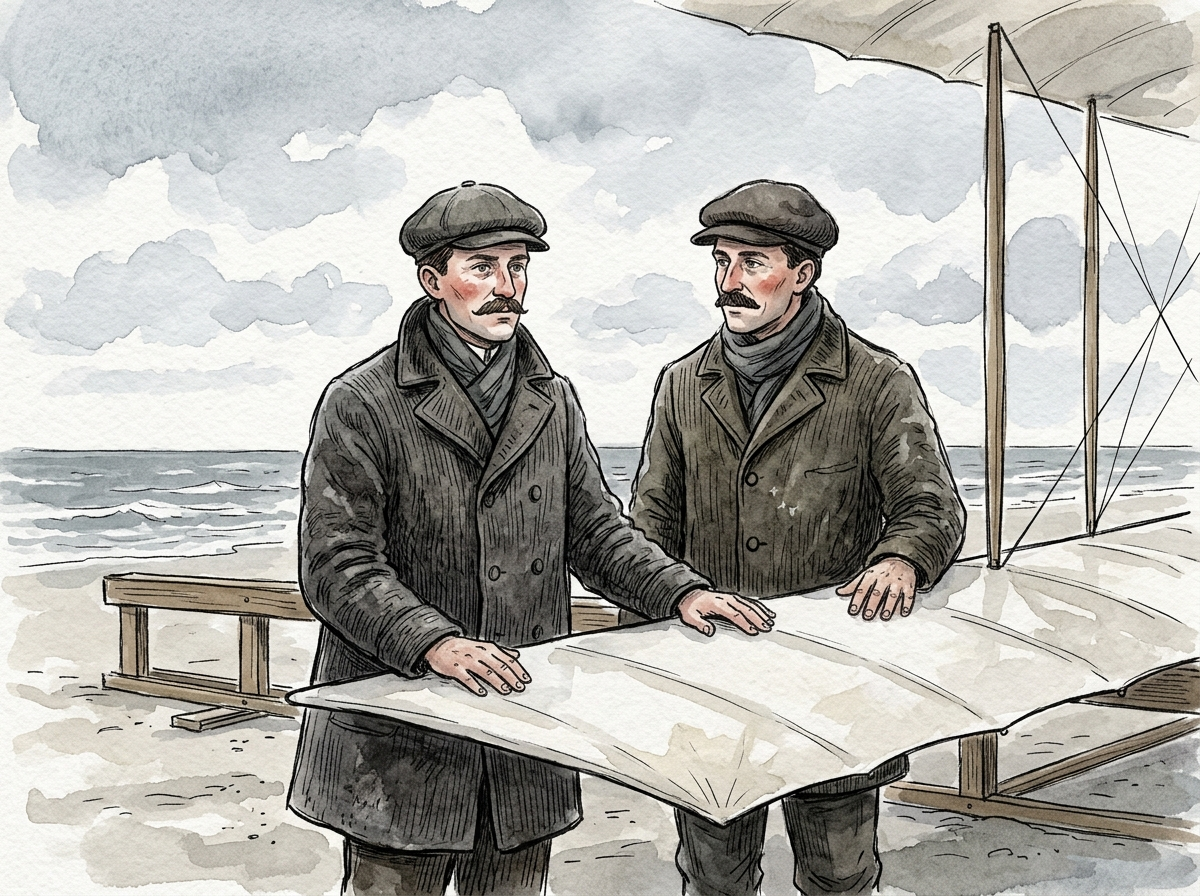
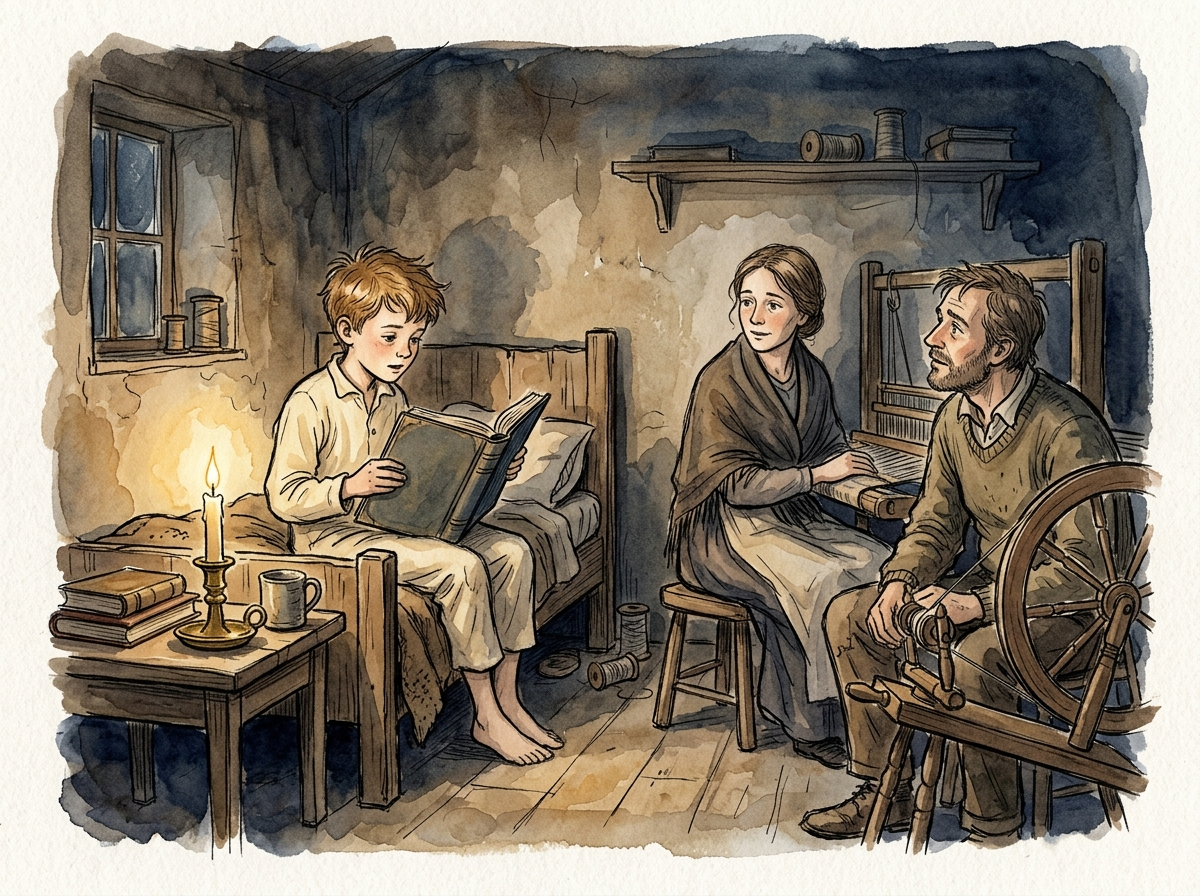
He started going to the Wapakoneta library every Saturday morning. He'd walk in, nod politely at the librarian, Mrs. Bowsher, and head straight for the aviation section. He read about the Wright Brothers, about Amelia Earhart, about how wings generated lift and how engines generated thrust. He read books that were meant for adults, books with diagrams and equations and words like aerodynamics and pitch and yaw.
Mrs. Bowsher once asked him, "Neil, don't you want to try something a little more fun? We just got in the new Hardy Boys."
Neil looked up at her with those calm, steady eyes and said, "This is fun."
She never asked again.
At home, he built model airplanes. Not the snap-together plastic kind — the real ones, made of balsa wood and tissue paper and glue that smelled so strong it made his eyes water. He'd spend hours in his tiny bedroom, hunched over his desk with a razor blade and a ruler, cutting each piece precisely. His younger brother Dean would poke his head in and say, "Wanna play catch?" and Neil would hold up one finger — just a minute — and Dean knew that "one minute" meant at least another hour.
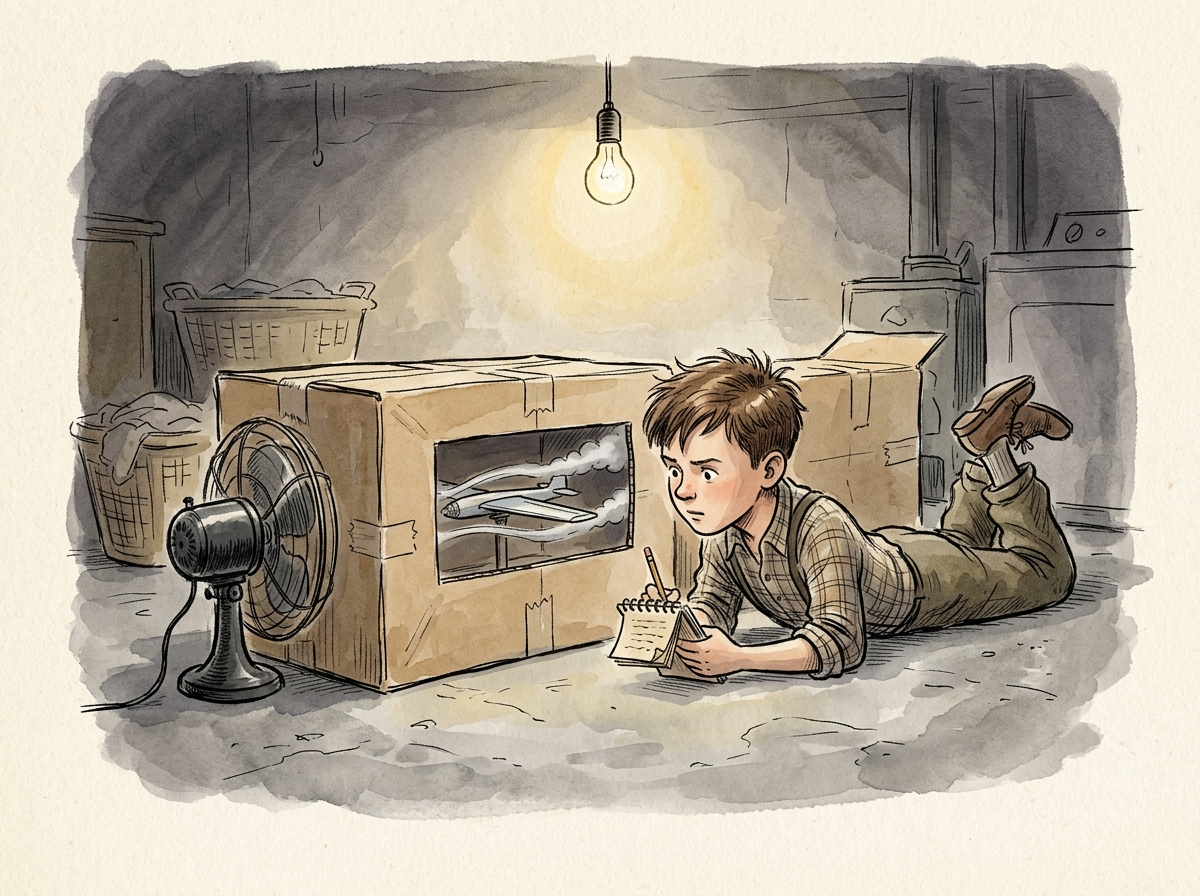
He even built a wind tunnel in the basement. An actual wind tunnel. He used an old electric fan, some cardboard boxes, and a lot of tape. It wasn't pretty. It leaked air from about four different places. But it worked well enough for him to test his model wings, to see which shapes caught the air best, which ones wobbled, and which ones held steady.
His mother, Viola, would come downstairs to do laundry and find Neil lying on the cement floor, peering through the side of his cardboard contraption, taking notes in a little notebook.
"Dinner's in ten minutes," she'd say.
"Okay," he'd say, not looking up.
"Neil. Dinner."
"Mm-hmm."
She'd set a plate aside for him.
School was fine. Neil got good grades — really good grades, actually — but he didn't raise his hand much. He wasn't trying to impress anyone. When he knew the answer, he just... knew it, quietly, and moved on. Some teachers thought he was shy. Some thought he was bored. One teacher, Mr. Crites, figured out something closer to the truth.
"Neil's not bored," Mr. Crites told Viola at a parent conference. "He's just already three steps ahead. He's waiting for the rest of us to catch up."
There was one afternoon in Mr. Crites's class that the other kids talked about for years afterward. They were studying the solar system, and Mr. Crites asked the class how far away the moon was.
Somebody guessed a thousand miles. Somebody else guessed a million.
Neil, from the back row, said, "About 238,900 miles, on average. It changes because the orbit is elliptical."
The room went dead silent.
Bobby Kiefer, who sat two rows up, turned around and stared at Neil like he'd just sprouted a second head. "How do you know that?"
Neil shrugged. "I read it."
That was Neil. He never showed off. He never bragged. He just read things, remembered them, and kept going.
When Neil was fourteen, he started taking real flying lessons. He'd earned the money himself, working at Rhine and Brading's Pharmacy in town, stocking shelves and sweeping floors for forty cents an hour. Every dollar went into an envelope he kept in his dresser drawer, labeled in his neat handwriting: FLYING.
His instructor was a man named Aubrey Knudegard, out at the small grass airfield north of town. Aubrey was the kind of pilot who chewed on a toothpick and didn't waste words, which suited Neil just fine.
"You ready?" Aubrey asked on the first day.
"Yes, sir."
"You scared?"
Neil thought about this honestly. "A little."
Aubrey nodded. "Good. Scared keeps you careful. Let's go."
Neil was a natural. Not flashy, not reckless — just smooth and precise. He listened to the engine. He felt the wind through the controls. When turbulence bumped the little Aeronca Champion sideways, Neil didn't overcorrect. He made small adjustments, waited, and let the plane find its balance.
"Most new pilots fight the airplane," Aubrey told him after the third lesson. "You fly with it. That's rare."
On his sixteenth birthday, Neil Armstrong earned his pilot's license. He could fly a plane before he could drive a car. Think about that for a second. While other kids his age were studying for their driver's test, Neil was three thousand feet in the air, alone in a cockpit, looking down at the same cornfields he used to watch hawks circle over.
But here's the thing about Neil that matters most, the thing that made him different from all the other smart kids, all the other dreamers, all the other boys who built model airplanes and loved the sky.
He didn't just dream. He prepared.
When something went wrong — and things went wrong all the time — Neil didn't panic. Once, during a solo flight, his engine sputtered at two thousand feet. The propeller coughed, caught, coughed again. Most sixteen-year-olds would have frozen. Neil ran through his checklist. Fuel mixture: check. Carburetor heat: on. Altitude: sufficient for a glide to the field. He adjusted his approach, kept his airspeed steady, and landed without a scratch.
When he climbed out of the cockpit, his hands were shaking. But they hadn't been shaking up there.
Aubrey was waiting by the hangar. "Engine trouble?"
"Carburetor ice, I think," Neil said.
"You handle it okay?"
"I think so."
Aubrey clapped him on the shoulder. That was as emotional as Aubrey got.
Years later — many years later — when NASA was looking for someone to command the first mission to land on the moon, they didn't pick the loudest astronaut, or the most famous, or the one who gave the best interviews. They picked the quiet kid from Wapakoneta who read books meant for adults, who built a wind tunnel out of cardboard, who earned forty cents an hour to pay for something he believed in, and who, when everything went sideways thousands of feet in the air, just calmly worked the problem.
On July 20, 1969, when Neil Armstrong stepped off the ladder of the lunar module and pressed his boot into the powdery gray surface of the moon, six hundred million people watched on television. It was the biggest audience in human history. And the first words spoken from the surface of another world came from a man who had never been comfortable with attention, who had always preferred doing things to talking about them.
But before all of that — before the spacesuit and the static-filled radio and the bootprint that's still up there right now, untouched — there was just a boy on a porch in Ohio.
Looking up.
Author's note: Most of the details in this story are true. Neil really did ride in the Tin Goose at five, build model planes and a basement wind tunnel, work at a pharmacy, earn his pilot's license at sixteen before his driver's license, and take lessons from an instructor at the Wapakoneta airfield. Some scenes and dialogue have been imagined to bring the story to life, but the kid? He was real. Every bit of him.