Once Upon a Time
Thumbelina: The Long Winter
Once Upon a Time
Ages 3–5 · 12 min
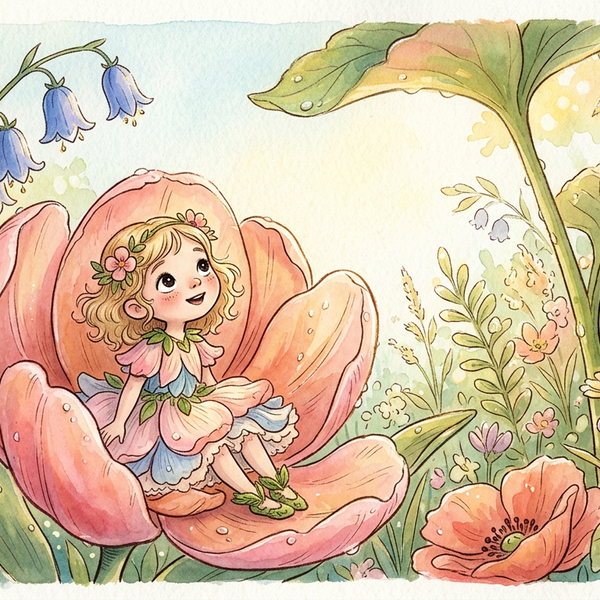
Thumbelina finds shelter with a kind field mouse — but the grumpy mole next door wants to marry her. Then she finds a frozen swallow.
THUMBELINA — PART TWO: THE LONG WINTER
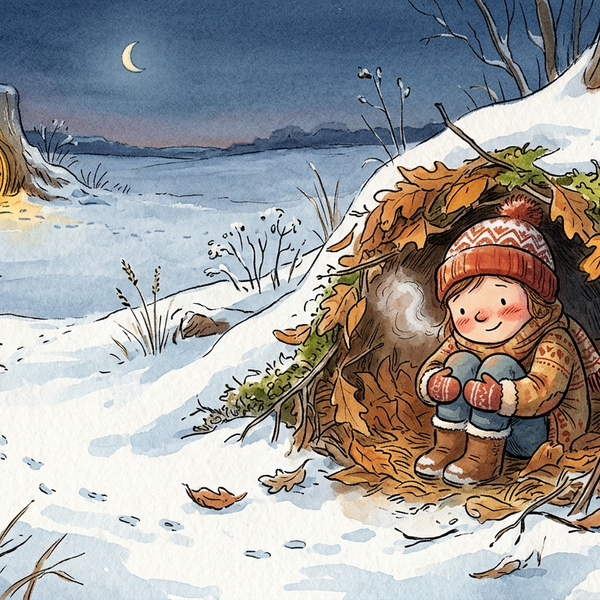
Autumn came, and the leaves turned gold and red. Then the cold winds blew them all away. Thumbelina felt very cold. Her dress was torn and thin. She was such a tiny girl, and the world was so big and cold around her.
THUMBELINA — PART TWO: THE LONG WINTER
Autumn came, and the leaves turned gold and red. Then the cold winds blew them all away. Thumbelina felt very cold. Her dress was torn and thin. She was such a tiny girl, and the world was so big and cold around her.
Snow began to fall. Every snowflake felt like a whole shovelful to Thumbelina, because she was so very small. She wrapped herself in a dry leaf, but it did not keep her warm. She was hungry too.
At the edge of the big wood, she came to a field of corn. The corn had been cut long ago. Only the dry, bare stalks were left, standing up out of the frozen ground. To Thumbelina, walking among them felt like walking through a great forest.
Then she found a little door. It was the home of a field mouse. The field mouse lived snug and warm under the ground. She had a little kitchen and a full store of food. She was quite comfortable.
Thumbelina stood at the door like a poor little beggar girl. She asked for a small piece of barleycorn, because she had not eaten anything for two whole days.
"You poor little thing!" said the field mouse. She was a kind old field mouse, really. "Come into my warm home. You can eat with me."
Thumbelina went inside. She liked the field mouse very much. "You may stay with me through the winter," said the field mouse. "But you must keep my rooms clean and tidy, and you must tell me stories. I do love a good story." Thumbelina was happy to do that, and so she stayed.
"We will soon have a visitor," said the field mouse one day. "My neighbor comes to see me every week. He has an even bigger house than mine. He wears a fine black coat and he is very rich. It would be wonderful if you could marry him." But Thumbelina did not like this idea at all. The neighbor was a mole.
The mole came to visit. He wore his black velvet coat and he was very rich, just as the field mouse had said. He was clever too, the field mouse told Thumbelina. But he did not like the sun. He did not like pretty flowers. He had never seen them, and he said unkind things about them.
Thumbelina had to sing for him. She sang "Ladybird, Ladybird, Fly Away Home" and other pretty songs. The mole fell in love with her because she sang so beautifully. But he did not say anything yet. He was a very careful mole.
He had just dug a long tunnel through the ground, from his house to theirs. He said that the field mouse and Thumbelina could walk there whenever they liked. But he told them not to be frightened by the dead bird lying in the tunnel. It had died very recently. It had all its feathers and its beak, and it must have died just when winter began.
The mole took a piece of dry wood in his mouth. Dry wood shines like a little light in the dark. He walked ahead and lit the way through the long, dark tunnel.
When they came to the place where the dead bird lay, the mole pushed his broad nose up against the ceiling and pushed through the earth, making a hole so a little light could come in.
There on the ground lay a swallow. Its wings were pressed tight against its sides. Its feet and head were tucked in under its feathers. The poor bird had surely died of cold.
Thumbelina felt so sorry for it. She loved all the little birds. They had sung to her and tweeted so sweetly all through the summer. But the mole pushed the bird with his short leg and said, "That one won't be tweeting anymore. How sad it must be to be born a little bird. Thank goodness none of my children will be birds. A bird has nothing but its tweet-tweet, and then it must starve and freeze in winter."
"Yes, you are quite right," said the field mouse. "What does a bird get from all that tweeting when winter comes? It must starve and freeze. But I suppose that seems very grand to some people."
Thumbelina said nothing. But when the other two had their backs turned, she bent down and gently moved the feathers away from the bird's head. She kissed its closed eyes softly.
Perhaps this is the one who sang so beautifully to me in the summer, she thought. Dear little bird, how much joy you gave me.
The mole closed up the hole he had made, and walked the ladies home. That night, Thumbelina could not sleep. She got up and wove a beautiful blanket from hay. It was soft and warm. She carried it down into the dark tunnel and spread it over the dead bird. She tucked soft cotton wool from the field mouse's house all around him, so he would be warm in the cold ground.
"Goodbye, you beautiful little bird," she said. "Goodbye, and thank you for your lovely songs last summer, when all the trees were green and the sun was warm."
She laid her head on the bird's chest. Then she had a big surprise. She heard something. Thump. Thump. It was the bird's heart. The swallow was not dead. He had only been frozen stiff with cold. And now he was getting warm again.
In autumn, all the swallows fly away to warm countries. But if one stays behind too long, the cold catches it. It falls down and lies still. Then the cold snow covers it up.
Thumbelina was frightened. The bird was so big, so very big next to her. But she was brave. She tucked the cotton wool tighter around the poor swallow and fetched a curled leaf she had been using as her own blanket. She laid it over the bird's head.
The next night she crept back down to him again. He was alive now, but very weak. He could only open his eyes for a moment and look at her. There she stood with a little piece of glowing wood for her light, like a tiny lantern.
"Thank you, little child," the sick swallow said softly. "I am so warm now. I will soon be strong again."
"Oh, don't talk about that," said Thumbelina. She felt so sorry for him. "It is very cold outside. Stay here in your warm bed. I will look after you."
She brought him water in a flower petal. He drank it and told her how he had hurt his wing on a thorny bush and could not fly away with the other swallows when they left for warm countries far away. Then he had fallen to the ground. He could not remember anything after that. He did not know how he had come to be here.
All through the winter Thumbelina looked after him. She did not tell the field mouse or the mole about the swallow. They did not like birds.
When spring came and the warm sun began to reach into the ground again, the swallow said goodbye to Thumbelina. She opened the hole the mole had made. The sun shone in, beautiful and bright. The swallow asked if she would come with him. She could sit on his back and they would fly away together into the green woods.
But Thumbelina could not do it. She knew it would make the field mouse very sad if she left just like that.
"No, I cannot come," she said.
"Goodbye then, goodbye, you kind and lovely girl," said the swallow. He flew out into the sunshine. Thumbelina watched him go. Her eyes filled with tears. She loved the poor swallow very much.
Tweet-tweet, tweet-tweet, sang the bird, and flew away into the green woods.
Thumbelina was very sad. She could not go out into the warm sunshine at all. The corn growing in the field above her home had grown very tall. To that tiny girl, it was like a thick forest.
"This summer you must sew your wedding clothes," the field mouse told her. The mole in his black velvet coat had asked Thumbelina to marry him. "You will need both wool and linen. You must have everything ready for when you are the mole's wife."
Thumbelina had to sit and spin. The field mouse hired four spiders to help spin and weave day and night. Every evening the mole came to visit. He always talked about the end of summer, when the sun would not be so hot and the earth would not be so hard. Yes, when summer was over, he would marry Thumbelina. But Thumbelina was not happy. She did not want to marry the dull old mole. She did not want to live deep underground, away from the warm sun, forever and ever. The mole did not like the sun at all.
Every morning when the sun rose, and every evening when it set, she crept to the door of the field mouse's home and pushed it open just a little. She looked up at the beautiful blue sky. She thought about how bright and lovely it was out there. She wished so