The Thing Only She Knows
Fable
Ages 9–11 · 12 min
While her new friend Margot is sleeping over, Sloane must keep the secret that she has to check the front door lock three times every night or something bad will happen.
Sloane Harper was excellent at being Sloane Harper.
She was excellent at walking into a room like she'd been there a hundred times. She was excellent at laughing at exactly the right moment. She was excellent at answering questions in class with just enough confidence to sound smart but not so much that anyone would call her a show-off.
Sloane Harper was excellent at being Sloane Harper.
She was excellent at walking into a room like she'd been there a hundred times. She was excellent at laughing at exactly the right moment. She was excellent at answering questions in class with just enough confidence to sound smart but not so much that anyone would call her a show-off.
She had it all figured out. Every piece in place.
At school, she was the girl who could talk to anyone — the soccer kids, the art kids, the kids who spent every lunch period arguing about whether a hot dog was a sandwich. She floated between all of them like water, fitting the shape of whatever container she landed in.
Her teachers called her "a pleasure to have in class."
Her mom called her "my easy one."
Her neighbors called her "such a polite young lady."
And all of that was true. Sloane was polite. She was easy. She was a pleasure.
But there was one thing about Sloane that nobody knew.
Well — almost nobody.
It started in third grade, the year Sloane's dad moved out. Not far — just twelve minutes across town to an apartment with thin walls and a balcony that overlooked a parking lot. But it felt like the other side of the world.
Sloane didn't cry about it at school. She didn't tell anyone. When Aiden Brooks asked why her dad didn't come to the fall festival, she said, "He's traveling for work," and that was that. Easy. Neat. Done.
But at home, something changed.
Every night before bed, Sloane would check the lock on the front door. Then she'd check it again. Then one more time. She'd press her thumb against the deadbolt and count to three, and only then could she walk away. If she lost count, or if her thumb slipped, she had to start over.
It wasn't just the door.
She checked that her window was latched — twice. She checked that her backpack was zipped — three times. She lined up her shoes by the bed so the toes pointed the exact same direction, and if one shoe was even slightly crooked, she'd fix it until her chest stopped feeling tight.
She didn't know why she did it. She just knew that if she didn't, something bad would happen. She couldn't say what. Just — something. Something big and shapeless and terrible, like a wave she couldn't see but could feel pulling at her ankles.
She never told anyone.
Not her mom, who had enough to worry about. Not her dad, who she wanted to seem fine for. Not her teachers, who thought she was a pleasure.
She kept it locked up tighter than the front door.
Then came Margot.
Margot Huang moved to town the summer before fifth grade. She had short hair that stuck up in the back, a collection of rubber ducks she was not embarrassed about, and a laugh so loud it could probably be heard from space.
They met at the community pool. Sloane was sitting on the edge with her feet in the water, and Margot cannonballed in right next to her, sending a wall of chlorinated splash directly into Sloane's face.
"Sorry!" Margot yelled, not looking sorry at all. "I'm Margot. I just moved here. Do you want to see how long I can hold my breath? It's really long. Like, disturbingly long."
It was eleven seconds. It was not disturbingly long.
But Sloane laughed — a real laugh, not the perfectly timed one she used at school — and something clicked.
They became the kind of friends who develop their own language. They had a ranking system for every type of cheese. Mozzarella: overrated. Pepper jack: underrated. American: "not even really cheese, Margot." They had a secret handshake that involved elbows. They had a running list called "Things That Are Worse Than Homework," which included mosquito bites on your ankle bone, wet socks, and the sound of someone chewing with their mouth open.
Margot was loud where Sloane was quiet. Messy where Sloane was neat. Margot said exactly what she was thinking approximately zero-point-three seconds after she thought it, which was both thrilling and terrifying.
And Margot noticed things.
It happened on a Friday night sleepover, three months into their friendship. They'd eaten too much popcorn and watched a movie about a dog that could solve crimes, and now they were lying on Sloane's bedroom floor in sleeping bags, talking in the dark.
Margot was in the middle of a story about her older cousin who accidentally glued his hand to a bowling ball when Sloane realized she hadn't checked the front door yet.
The feeling started like a small pebble in her stomach. Then it grew. Her fingers began to fidget inside her sleeping bag. Her chest tightened. She tried to keep listening to Margot's story, tried to laugh in the right places, but the wave was pulling at her ankles and she couldn't think about anything else.
"I have to go to the bathroom," Sloane said. "Be right back."
She slipped downstairs in the dark. Found the front door. Pressed her thumb to the deadbolt. One. Two. Three. Okay. But her thumb slipped on three, so she started over. One. Two. Three. Better. But was it actually locked? She turned it once to check. Locked. She pressed again. One. Two —
"What are you doing?"
Sloane spun around so fast she nearly fell.
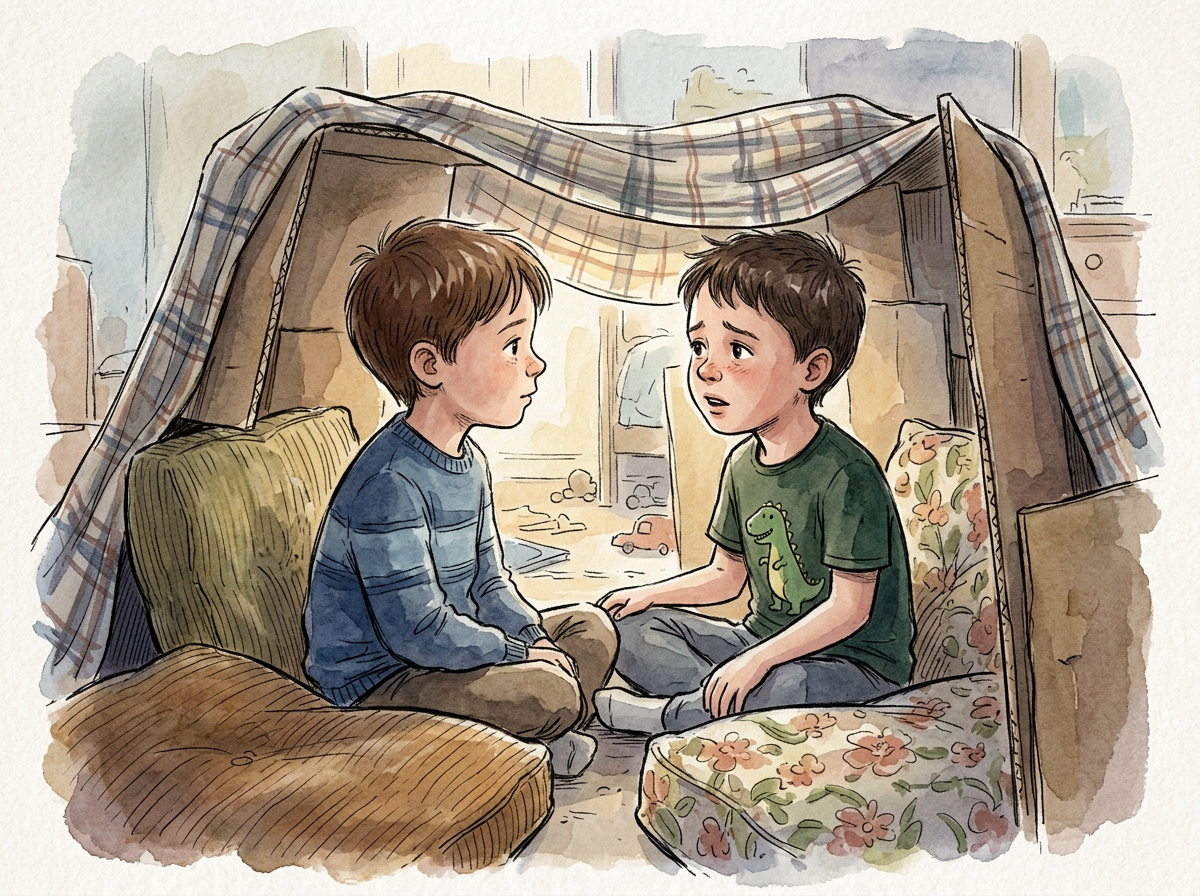
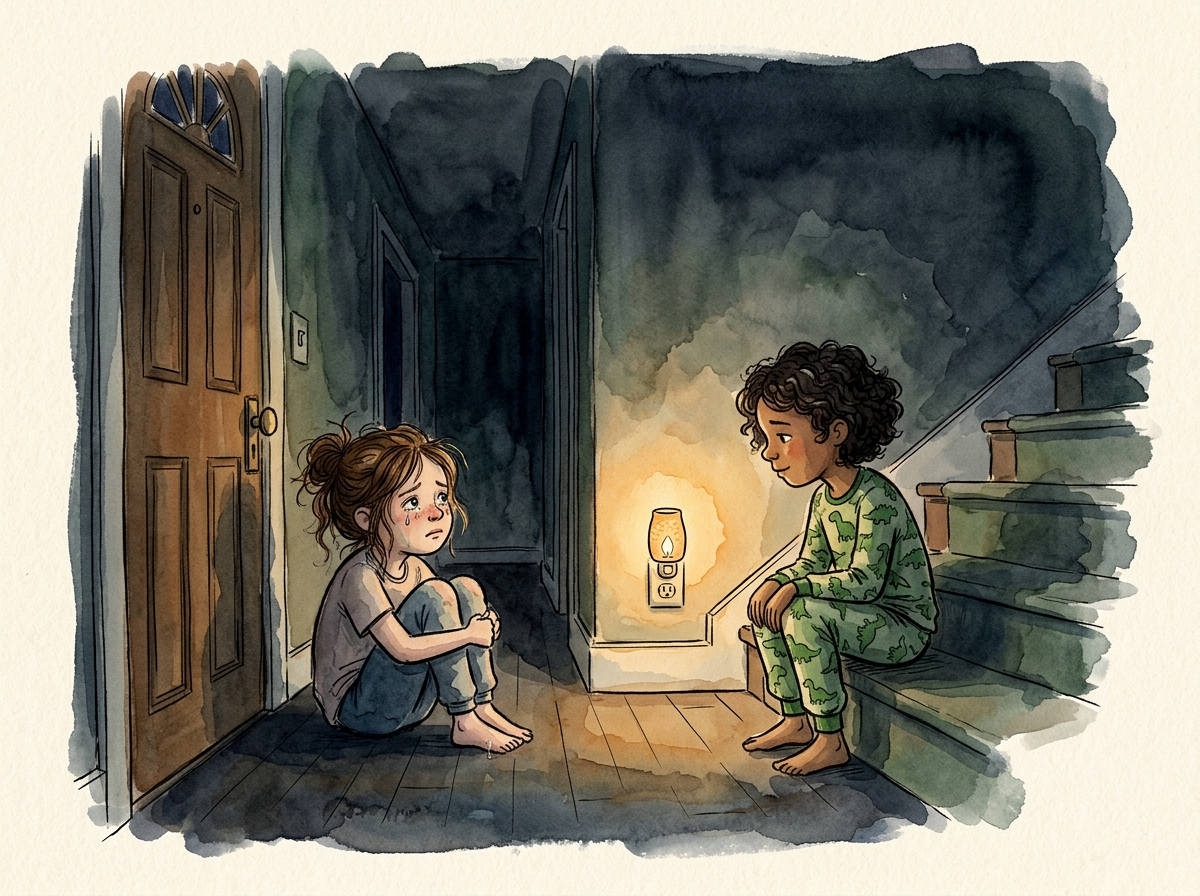
Margot was standing at the bottom of the stairs in her dinosaur pajamas, squinting in the dark.
"Nothing," Sloane said. "Just — checking the door."
"You already checked it before the movie. I saw you."
The silence that followed was enormous.
Sloane's throat went tight. She could feel the explanations lining up in her chest — I just forgot, it's nothing, I'm just being safe, my mom asked me to — all the easy, neat little lies she could wrap this in.
But Margot just stood there. Not laughing. Not looking confused. Not looking at Sloane like she was weird. She was just — looking. Like she was waiting. Not for an explanation.
Just waiting for Sloane.
"I check things," Sloane said. Her voice came out small. "The door. The windows. My shoes. I have to do it a certain way or I feel like..." She trailed off. She'd never said this out loud before, and the words felt strange in her mouth, like speaking a language she'd only ever thought in.
"Like what?" Margot asked. Not pushing. Just asking.
"Like something bad will happen."
Another silence. This one was different, though. It didn't feel enormous. It felt like a room with the door open.
Margot sat down on the bottom stair. "How long have you been doing that?"
"Since third grade. Since my dad moved out."
"Does it help? The checking?"
Sloane thought about this honestly, maybe for the first time. "For a minute. Then I have to do it again."
Margot nodded slowly. She pulled her knees up to her chest. "My mom does something like that," she said. "She counts stuff when she's stressed. She went to a doctor about it, and the doctor gave it a name and everything. It helped."
Sloane felt something crack open inside her chest, and it wasn't the terrible shapeless thing she'd been afraid of. It was more like a window she'd painted shut finally being pried loose.
"You think I'm weird," Sloane whispered.
"Sloane. I own forty-seven rubber ducks. I am not in a position to call anyone weird."
Sloane laughed. It was a shaky, watery laugh, and it came with two tears that rolled down her cheeks before she could catch them.
"Also," Margot added, "you're, like, my favorite person. So."
They sat on the stairs for a long time after that. Margot didn't try to fix it. She didn't say "just stop worrying" or "there's nothing to be afraid of" or any of the things Sloane had imagined someone might say — which was exactly why she'd never told anyone in the first place.
Margot just sat with her.
Things didn't magically change after that night. Sloane still checked the locks. She still lined up her shoes. The wave still pulled.
But something was different.
The next week, Margot slept over again. When Sloane got up to check the door, Margot didn't pretend not to notice. She just said, "Want company?" and walked downstairs with her. They checked the lock together, and Margot said, "Yep, that's locked. That is a very locked door. That door is not messing around." And Sloane laughed, and the tightness in her chest loosened just a little.
Two weeks later, Margot texted her a link. It was an article about something called OCD — obsessive-compulsive disorder. The text said: Read this and tell me if it sounds familiar. No pressure. Also, pepper jack is now number one on the cheese list. I will not be taking questions.
Sloane read the article three times. It sounded so familiar it made her eyes sting.
She showed it to her mom that weekend. Her mom's face went soft and complicated, and she pulled Sloane into a hug and said, "Oh, honey. How long?" And when Sloane said, "Since third grade," her mom cried, and Sloane cried, and it was messy and not neat at all.
Her mom made an appointment with a doctor the next day.
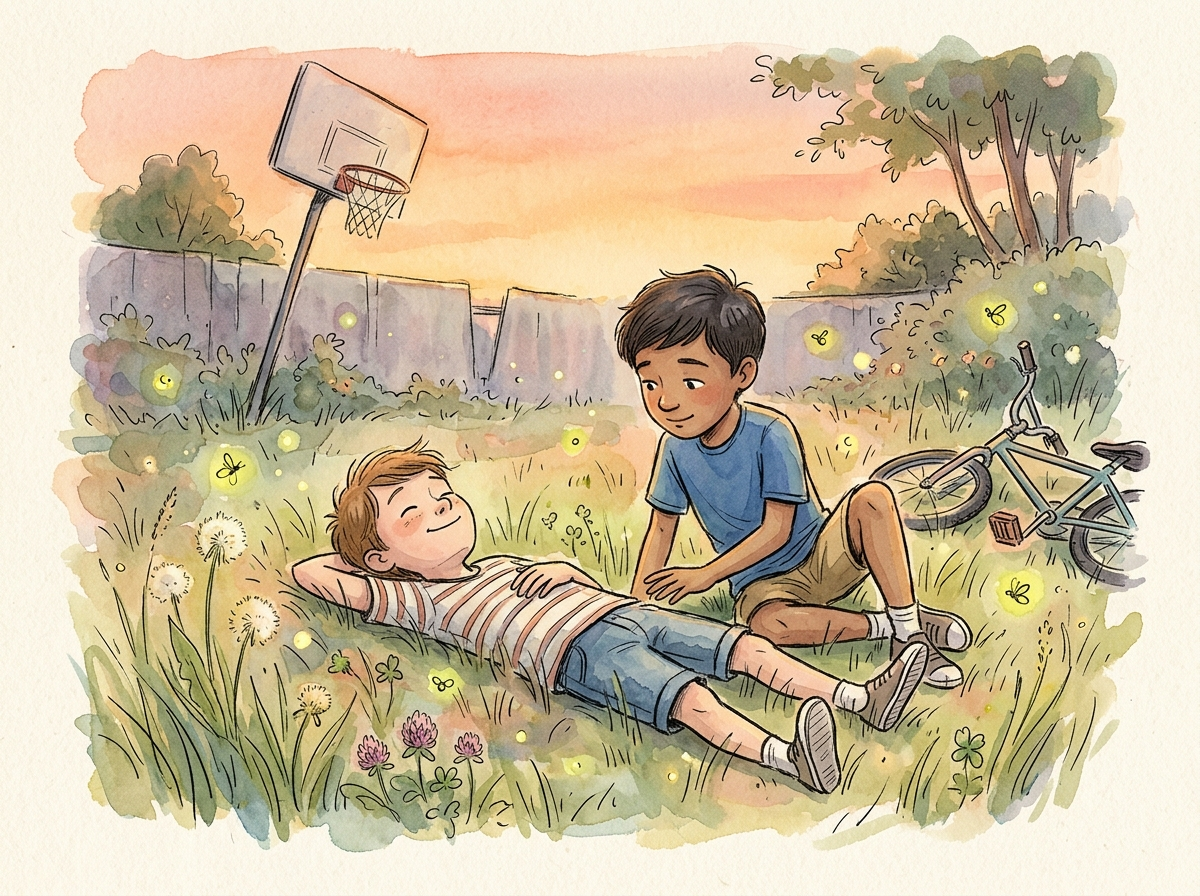
Months later, on a warm afternoon in June, Sloane and Margot were lying on the grass in Margot's backyard, staring up at clouds and arguing about whether one looked more like a taco or a shoe.
"It's clearly a taco," Margot said.
"It's a shoe, Margot. It has a heel."
"Tacos can have heels."
"That doesn't even make sense."
Margot grinned. "I don't need to make sense. I need to be right."
Sloane smiled. The grass was warm beneath her back. She'd had her fourth appointment with Dr. Linden last Thursday, and they were working on something called exposure and response prevention — which was a fancy way of saying: feel the wave, and don't check. Let it pass. It was hard. Some days it was really hard. But the wave was getting smaller.
"Hey, Margot?"
"Yeah?"
"Thanks for — you know. The stairs thing. That night."
Margot was quiet for a moment. Then she reached over and did their elbow handshake, right there on the grass.
"You would've done the same for me," Margot said.
And Sloane knew, with complete certainty, that this was true.
The cloud drifted. It didn't look like a taco or a shoe anymore. It just looked like a cloud — shapeless and big and not scary at all.